
Drama Story: Exposed Prank
SixGLabPuzzle
4.642.00 Reviews
- Version
- 1.0.8
- Installs
- 500.00K
- Age Rating
- Teen
Screenshots

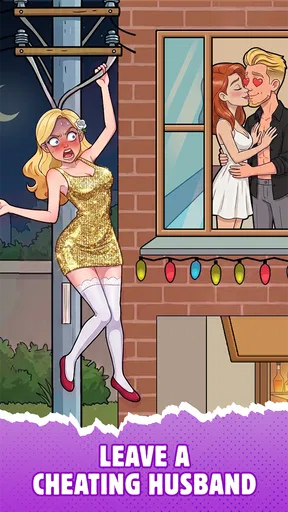
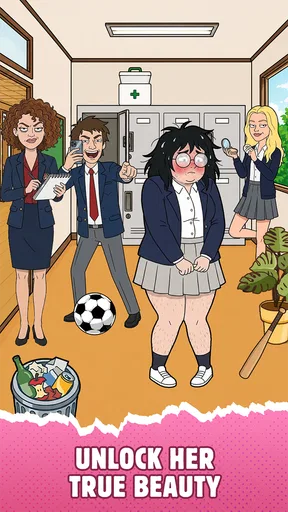
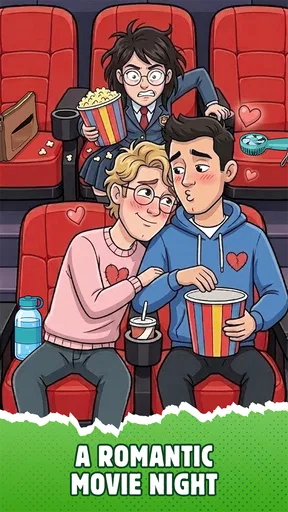
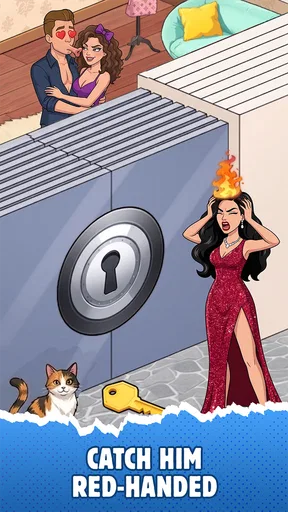


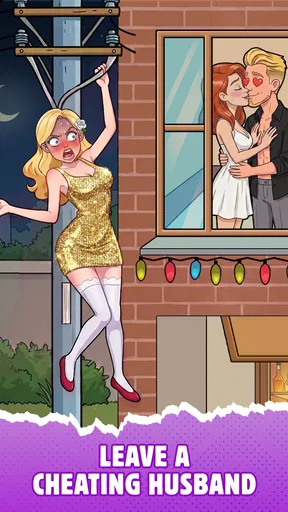
Our Review of Drama Story: Exposed Prank
 Analysis by Appyee
I approached Drama Story: Exposed Prank expecting a light puzzle game, but its appeal is less about traditional matching or arranging pieces and more about following dramatic situations where the right interpretation matters. The game from SixGLab places you inside short love-story scenarios and asks you to think through what is happening rather than simply react quickly. That makes it a comfortable choice for players who enjoy narrative puzzles, relationship drama, and small moments of discovery.
The basic idea is easy to understand: read the situation, examine what is happening, and work toward the solution that exposes the truth behind the scene. The “prank” angle gives the stories a playful edge, while the romantic drama keeps the challenges from feeling like disconnected brainteasers. I found that combination more engaging than a standard puzzle format because each action feels tied to a character or a problem instead of being an isolated task.
It is free to start, which makes it simple to try without committing money immediately. The game is aimed at a Teen audience, so the tone is better suited to older children, teenagers, and adults than to very young players. Optional purchases range from $0.99 to $9.99 per item, something I would keep in mind before handing the phone to a child or allowing unrestricted spending.
What the first session feels like
When I begin a game like this, I want to know whether the opening minutes explain themselves without making me study a manual. Drama Story: Exposed Prank works best when I treat the first scenes as both story and tutorial. Instead of rushing through the dialogue or visual clues, I pay attention to who is involved, what seems unusual, and which detail does not fit the apparent explanation.
The first meaningful success comes from connecting the situation to the correct action. That may sound obvious, but it is an important distinction from reflex-based puzzle games. I do not need to be the fastest person tapping the screen. I need to understand the scene. My practical advice is to read each prompt fully before touching anything. A hurried tap can make a simple clue feel confusing, while a few seconds of observation usually makes the intended direction clearer.
The game’s store summary describes a collection of tricky dramas and love stories, and that is a useful expectation to carry into the opening. You are not just solving abstract shapes or numbers. You are interpreting small conflicts, suspicious moments, and emotional reactions. If you enjoy the feeling of uncovering what a character is hiding, the format becomes appealing quickly.
Starting without overthinking the controls
For a first-time player, I would avoid trying to predict the entire game from the opening scene. Focus on the immediate question in front of you. Look for objects, expressions, wording, or changes in the scene that appear deliberately placed. In narrative puzzle games, the most important clue is often not the loudest one; it is the detail that explains why the situation feels wrong.
I also recommend separating observation from action. First scan the scene, then decide what deserves attention, and only afterward try the likely interaction. This small habit reduces random tapping and makes the solution feel earned. It is especially useful when a scene contains several possible points of interest and the game expects you to notice the one connected to the story.
One of the more useful ways to play is to treat every failed attempt as information rather than as a reason to tap everything. If an action does not move the story forward, ask what assumption led you there. Did you misunderstand the relationship between the characters? Did you focus on a visible object while ignoring the dialogue? This approach turns trial and error into a reasoning process.
How I reached the first satisfying solution
My preferred route through the opening is deliberately slow. I read the scene, identify the central conflict, and then look for the clue that could change the interpretation. In a love-story puzzle, the obvious explanation may be jealousy, dishonesty, or a misunderstanding, but the actual solution can depend on a smaller detail. The game is most enjoyable when I resist choosing the first dramatic explanation and inspect the context instead.
That is also the first non-obvious lesson I would give a new player: story logic is usually more valuable than speed. If you approach every scene as a race, you may miss the reason an action works. If you approach it as a short mystery, the puzzles become easier to follow and the emotional payoff improves.
A realistic everyday use case is a short break during a commute or while waiting for an appointment. I can play a scene, stop after a successful action, and return later without needing the concentration demanded by a large strategy game. It suits people who want something more involving than scrolling but less demanding than a long competitive session.
That convenience has a trade-off. Players who want deep, open-ended puzzles may find the format too guided. The story structure points me toward a particular kind of answer, so the satisfaction comes from discovering the intended interpretation rather than inventing several equally valid solutions. I see that as a strength for casual play, but a limitation for puzzle fans who prefer complete freedom.
Reading the drama instead of tapping blindly
The biggest source of confusion is assuming that every visible element is equally important. In this type of game, the scene is designed to tell a story, not merely to decorate the screen. I get better results when I ask three simple questions: what changed, who benefits from the situation, and which detail contradicts the first impression?
This method is more reliable than repeatedly tapping every available area. It also helps preserve the game’s central appeal. Once random interaction becomes the main strategy, the drama loses its purpose and the puzzles feel like a guessing exercise. I would rather pause, reread the wording, and test one plausible idea than perform a rapid sweep of the screen.
Another useful tip is to watch for emotional reactions. A character’s response can be as informative as an object in the scene. If someone appears unusually calm, defensive, surprised, or eager to redirect attention, that reaction may tell me where the real problem lies. I would not treat every expression as a clue, but I would include behavior in my reading of the puzzle instead of looking only for physical items.
The game can also be confusing when I expect the title to define every challenge. The prank theme suggests humor and deception, but the love-story structure means the mood may shift between playful and tense. I would not approach every scene expecting a joke or a simple trick. Some situations are better understood as relationship mysteries with a playful presentation.
What to do when an answer does not work
When I choose an action and it fails, I avoid immediately repeating it in a slightly different place. Instead, I return to the story and identify the assumption behind my choice. If I thought one character was responsible, perhaps the scene is asking me to investigate the evidence rather than accuse anyone. If I focused on a suspicious object, perhaps it is only a distraction from the conversation.
This is where the game differs from a conventional logic-puzzle collection. The correct solution is often contextual. A move that would make sense in a purely mechanical puzzle may be wrong because it does not fit the characters’ motives. I find that rewarding when the connection is clear, although it can feel frustrating if I want exact rules stated in advance.
I would also avoid spending on an impulse simply because I am stuck. Since individual purchases can cost from $0.99 to $9.99, it is sensible to pause and reconsider the scene first. A short break often helps more than immediate assistance, especially when the obstacle is a missed line of dialogue rather than a genuinely difficult deduction.
For parents, the Teen content rating is worth treating as a practical guide rather than a decorative label. The game’s focus on romance, conflict, and dramatic situations makes it more appropriate for older players. It is free to download, but the presence of optional purchases means I would check the device’s purchase settings before letting a younger family member play independently.
How it compares with other puzzle choices
Compared with match-three games, Drama Story: Exposed Prank offers less emphasis on endless repetition and more emphasis on narrative context. A match-three title is usually better when I want a predictable rhythm that I can play without reading. This game is the better fit when I want each challenge to have a reason connected to characters and events.
It also differs from pure brain-training apps. Those apps often measure progress through numbers, speed, or increasingly difficult abstract exercises. Here, my progress is tied to understanding a situation. Someone who enjoys deduction through storytelling may find that more memorable, while a player looking for formal mathematics, memory tests, or competitive scoring should choose a different category of puzzle game.
Compared with interactive romance stories, this title puts more responsibility on the player to solve the scene. It is not enough to read and select a preferred emotional response. I need to notice the clue that exposes what is really happening. That makes it more active than a passive story, although players seeking extensive character customization or branching role-play may prefer a dedicated visual novel.
The game’s strongest position is between casual narrative entertainment and light detective work. It is approachable enough for a first session, but it still rewards careful reading. The trade-off is that its enjoyment depends heavily on whether I like the tone. If dramatic relationship problems and playful deception do not appeal to me, the puzzle mechanics alone may not be enough to carry the experience.
Who will get the most from it
I would recommend it to players who like short story-driven challenges, hidden motives, and the satisfaction of spotting a clue before the characters do. It is particularly suitable for someone who wants a casual game that can be played in small portions without demanding a long uninterrupted session.
It is less suitable for people who dislike reading, prefer fast arcade controls, or want puzzles with purely objective rules. It may also disappoint experienced puzzle players who expect complex multi-step deduction or several valid solutions to each problem. The game’s appeal is its accessible drama, not the depth of a large-scale mystery adventure.
SixGLab has positioned the release as a free puzzle game, and the current version is 1.0.8. It supports devices running Android 7.0 or later. The game has reached over 500 thousand installs and holds a 4.6 average from around 1.5 thousand ratings, which suggests that its blend of stories and puzzles has found a receptive audience. I would still judge it by the type of session I want, because popularity does not change the fact that the narrative format will suit some players much better than others.
Building a better play routine
After the first successful scene, I would keep a simple mental note of recurring patterns. Not every dramatic moment is solved by the same kind of clue, but remembering whether the game has recently emphasized dialogue, behavior, or an object can help me avoid repeating a failed approach. This is a small workflow that makes later play feel more deliberate without turning the game into homework.
I also recommend playing with enough attention to read the story, rather than opening it while doing something that constantly interrupts you. The controls may be casual, but the reasoning is easy to lose if I am switching between messages, conversations, and the game. A few focused minutes are more rewarding than a longer session filled with random taps.
For a shared device, I would let each player explain their theory before trying an action. That turns a single scene into a quick conversation: one person can track the character motives while another notices visual details. Because the challenges are story-based, this works better than simply handing over a controller and watching someone rush. It is a practical way to make the game social even though the core activity is individual puzzle solving.
Players who are sensitive to spending should decide in advance whether they will use optional purchases. The free entry point is helpful, but the presence of paid items means the game is not the same as a completely purchase-free puzzle experience. I prefer to treat any purchase as a deliberate choice after I have already decided that the stories are worth continuing, not as a shortcut during the first difficult moment.
One further trade-off is replay value. Narrative puzzles often have a strong first-play advantage because the surprise behind a scene matters. Once I know the explanation, repeating the same challenge may not feel as fresh. That does not weaken the initial experience, but it means I would recommend it primarily to people who value discovering a sequence of stories rather than endlessly replaying a single puzzle system.
My recommendation after spending time with it
Drama Story: Exposed Prank is an easy game to approach but a more thoughtful game to play well. Its best moments come when I stop treating the screen as a collection of tappable objects and start treating it as a short dramatic mystery. The combination of romance, deception, and puzzle solving gives ordinary casual play a clear identity.
I like that the first meaningful success depends on paying attention rather than mastering complicated controls. That makes it reassuring for newcomers, while the contextual clues give experienced casual players something to think about. The main limitations are equally clear: the story-led format may feel too guided for hardcore puzzle fans, and the dramatic tone will not appeal to everyone.
For a free puzzle game from SixGLab, it is worth trying if you want bite-sized scenarios with a stronger narrative hook than a standard matching game. I would start slowly, read every scene, and resist random tapping. If the character-driven mysteries work for you, the game can become a pleasant choice for short breaks. If you want competitive scores, abstract logic, or completely open solutions, another puzzle style will probably serve you better.
My final advice is simple: give the opening your full attention, solve the first scene through observation, and decide from that experience whether the tone feels right. This is a story puzzle first and a casual time-killer second. Once that distinction is clear, it becomes much easier to know whether the game belongs on your device.
Verdict
Strengths of Drama Story: Exposed Prank
- Short episodes make it easy to play in quick sessions.
- Dramatic twists keep the story engaging from chapter to chapter.
- Simple choices are easy to understand for casual players.
- Works well for fans of prank, relationship, and reality-show drama.
- Frequent reveals encourage players to continue to the next scene.
Limitations of Drama Story: Exposed Prank
- Some choices feel cosmetic and have little impact on the plot.
- Progress may be slowed by timers or limited in-game resources.
- The dramatic writing can feel repetitive after several chapters.
- Ads or optional purchases may interrupt the overall experience.
- The app may require a stable connection to load story content.
Similar Picks in This Category
View All
Block Blast!
HungryStudio4.8

Braindom: Brain Games Test
Lahana Game Studio4.6

AMAZE!
CrazyLabs LTD4.6

Sudoku - Classic Sudoku Puzzle
Oakever Games4.7

Art Puzzle - Puzzle Games
Easybrain4.8

Amaze GO!
Oakever Games4.9
Frequently Asked Questions
What is Drama Story: Exposed Prank about?
Drama Story: Exposed Prank is an interactive story game built around social drama, secrets, misunderstandings, and prank-inspired situations. You follow short episodes, read conversations, examine different characters’ reactions, and make choices that influence how each scene develops. The game is mainly designed for casual entertainment, especially for players who enjoy dramatic storytelling, suspenseful reveals, and quick decision-based gameplay rather than complex controls or traditional action mechanics.
How does the gameplay work in Drama Story: Exposed Prank?
The gameplay focuses on reading scenes, following conversations, and selecting responses or actions at important moments. Your decisions may change the tone of a conversation, reveal information, or lead the story toward a different outcome. Sessions are generally easy to pick up because the controls are simple and touch-based. However, the experience depends heavily on dialogue and pacing, so it is best suited to players who enjoy interactive fiction and episodic drama.
Is Drama Story: Exposed Prank free to download and play?
The application may be available to download at no initial cost, but free access does not always mean that every feature is completely unrestricted. Depending on the version and platform, you may encounter advertising, optional in-app purchases, reward-based viewing, or limits connected to progression. Before downloading, check the current store listing for pricing, available purchases, and any subscription information, since these details can change with updates or regional release differences.
Is Drama Story: Exposed Prank suitable for children?
Parents should review the game’s official age rating and store description before allowing younger players to install it. Because the story is based on pranks, interpersonal conflict, secrets, and dramatic situations, some scenes or dialogue may not be appropriate for every child. Advertising, external links, or optional purchases can also be relevant considerations. The game is generally more suitable for teenagers and adults who understand that its scenarios are fictional and entertainment-focused.
Does Drama Story: Exposed Prank require an internet connection?
An internet connection may be needed for some parts of the experience, particularly when loading advertisements, downloading story content, synchronizing progress, or accessing updated episodes. Certain previously loaded scenes might work temporarily offline, but offline availability can vary by device and version. If you plan to play while traveling, open the game beforehand and test it without a connection. Also make sure your device has enough storage for future content updates.
Play our best games!


